Electric cars have become much more prevalent in recent years, as an impending ban on the sale of new internal-combustion-powered vehicles – that is, ones with purely petrol or diesel drivetrains – looms on the horizon. But perhaps still holding some car owners back from making the transition from an older internal-combustion model to a full electric vehicle (EV) is the worry about how you charge them back up again. Here’s our guide to all the available charging options.
Home charging
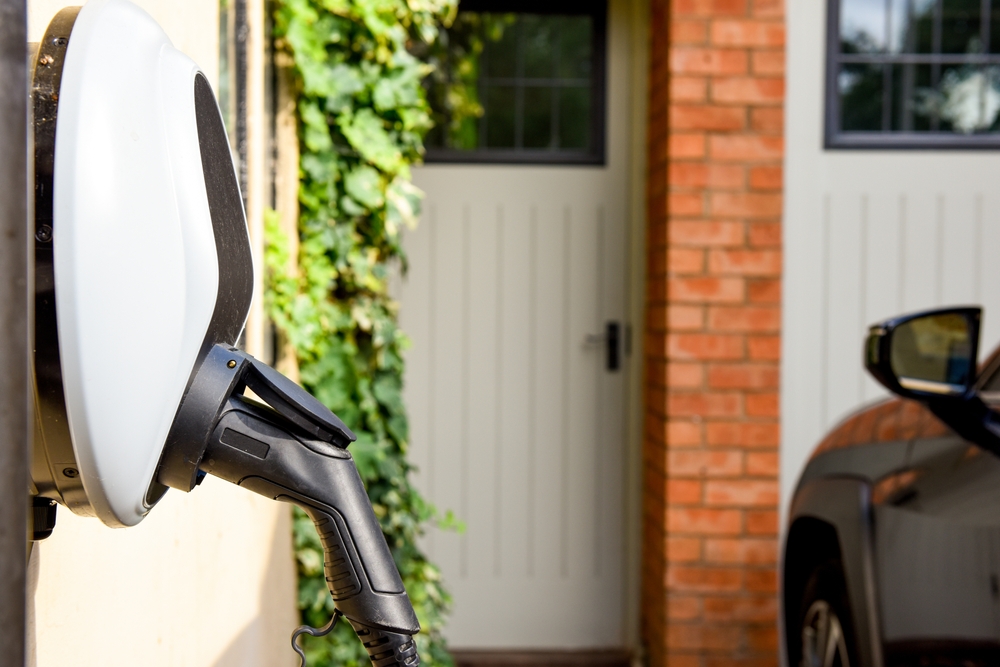
These home-charge points are usually installed on an outside wall of your house, or in your garage if you’re lucky enough to have such a thing, and they’re sometimes referred to as ‘wallboxes’ by the manufacturers. They draw down their power from your mains supply, so this is on a single-phase, 16-amp connection. Typically for EVs with larger battery packs (between 50- and 100kWh), recharging the battery fully from a low charge will take between six and eight hours; or overnight, which is the more common way of doing things.
On a single-phase connection, the maximum speed of a domestic wallbox is 7.4kW. Some domestic properties can run three-phase electrics, which means 11kW or even 22kW might be possible, but this is very uncommon here and requires a huge outlay. For most private properties, this won’t be possible due to the sub-station limitations, either.
Public charge points
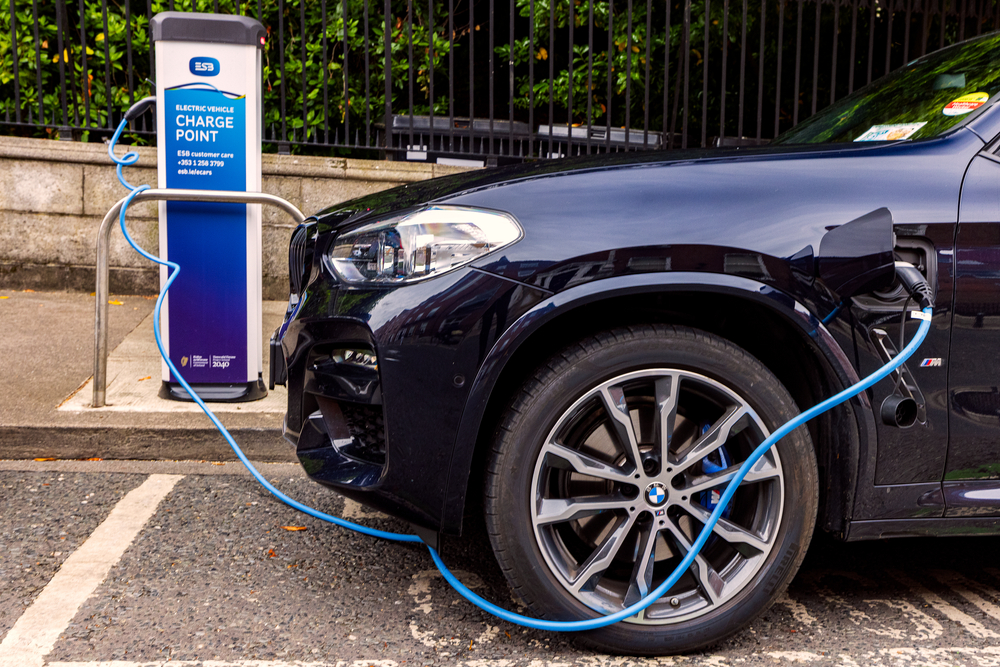
The idea with domestic charging is that you plug your car in and charge it overnight, then it will be ready for you in the morning with 100 per cent battery available to it. That allows you to drive to your place of work, where – hopefully, with a forward-thinking employer – more AC charge points will be provided which keep the battery topped up while you’re at your desk.
Alternatively, outside of domestic AC charging, there are public charging points. There are more than 2,500 locations across the country, and even the AC versions are quicker than topping your car up at home – often rated at 11kW or 22kW. You’d be looking at anything between one and five hours to perform a full charge on an EV if you can find these swifter public AC charging points.
Fast- and ultra-rapid charging points
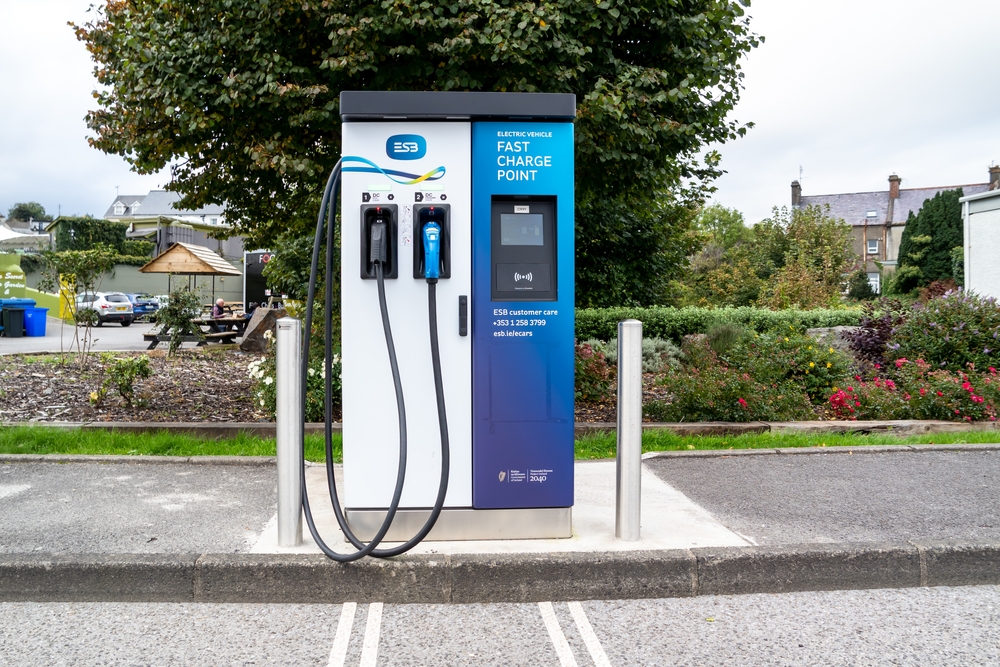
As EVs become ever more popular, widespread and the ‘norm’ of public transportation, this will become the most common type of public charger.
While the AC connections mentioned above are reasonably quick to top up an EV and faster than a domestic wallbox, for truly swift public charging then a DC (direct current) point is the only way to go. These work mainly on 120-amp, 400-volt DC, but there are some 800-volt units for the highest of charging speeds.
Formerly, anything from 50-100kW DC would’ve been enough to qualify as the fastest charging you could get, but the infrastructure in Ireland has received major investment over recent years to massively improve it. There are a lot of 50-100kW chargers, which will perform a 10-80 per cent battery top-up in around 30 minutes in the vast majority of EVs, but we now have 150kW+ sites and even 250- and 360kW locations which can be classified as ‘ultra-rapid’. Depending on your EV you could be looking at a 10-80 per cent battery charge in as little as 15 minutes.
Connectors in EVs
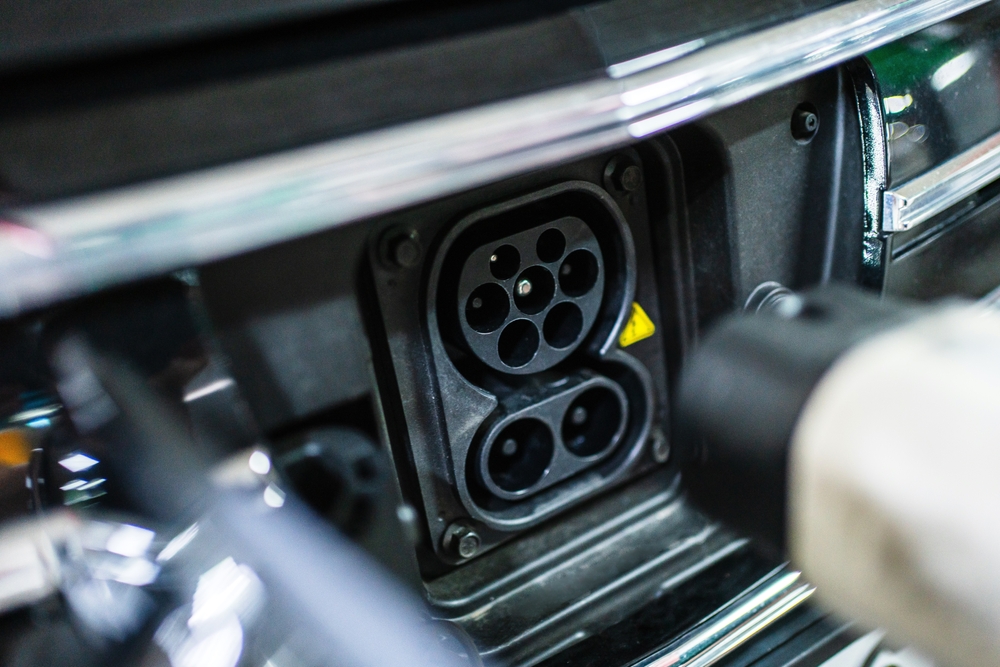
In the earlier days, there was no standardised design for the connectors in electric cars and the charging points. However, in more recent times, the widespread use of CCS Combo 2 charging ports in EVs has proliferated across the automotive industry, which means that what looks like a now-prescient move on Ireland’s part to go with Mennekes sockets (a seven-pin connection that forms part of the CCS Combo 2, and known as a Type 2 socket) some years back has turned out brilliantly.
That said, some public charge points will still offer a CHAdeMO connection, which is a type of charging port and connector that was most commonly seen on the original Nissan Leaf. Yet even Nissan has relented and adopted CCS Combo 2 for its later EVs, the Ariya and Mk3 Leaf included. So, the reality is that if your EV is reasonably young, the chances are almost infinitesimally low that you might turn up at a public charging point and somehow have the wrong type of connector to top your car up.
Future charging
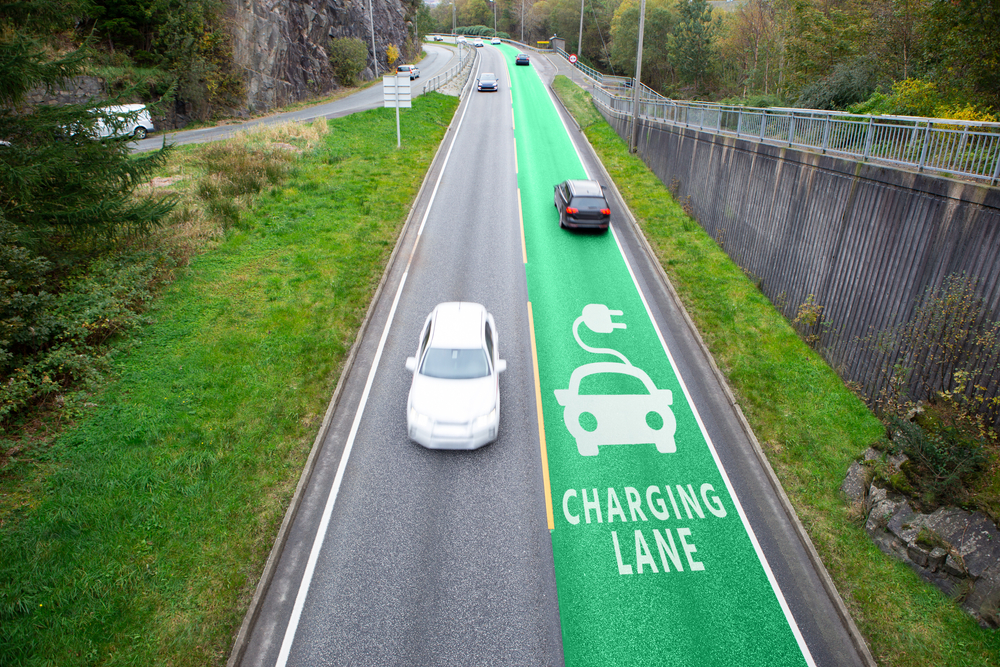
The car manufacturers are working on inductive wireless charging – and Porsche is already offering it to market in its all-electric Cayenne SUV. This system would see electric cars parking above fixed pads (usually in car-parking spaces in garages and multi-storeys etc) in the ground, with no wires required to link them to the source. The extension from here is that inductive charging pads could be turned into longer strips and run along roads, so that electric cars can charge up on the move and – theoretically – never have to stop for ‘fuelling’ again, although the cost and infrastructure work required for this last scenario would both be absolutely huge.