Irish drivers are used to paying through the nose for everything. VRT, insurance costs, motor tax, fuel duty, carbon tax — you name it, we pay it. However, electric cars offer a glimmer of hope because while some are still quite pricey to buy as new cars, many are now becoming affordable, offering the kind of power, performance and sophistication that you’d simply never have had before.
Better still, those more reasonably priced electric cars can come, potentially, with incredibly low running costs compared to a diesel, petrol or even hybrid car. However, there’s devil in the charging costs detail, so you need to do your homework. Crucially, you also really need to have a house with a driveway.
Without a driveway, or some other form of off-street parking at home where you can charge up at the cheapest electricity rates overnight, you will be losing out on the biggest financial advantage of running an electric car — the fact that the ‘fuel’ is incredibly cheap.
How cheap? Well, here’s a couple of examples using the latest prices for EV-specific home electricity plans.
In the past few weeks, SSE Airtricity has introduced a new EV-friendly home electricity plan that, for an introductory period, gives you 12.1c-per-kWh overnight electricity costs, between 11pm and 5am. So how does that work?
Well, let’s take two cars as an example. The Volkswagen ID.4 with its 77kWh battery is Ireland’s best-selling EV right now, while the smaller, more affordable, Hyundai Inster, with its 49kWh battery is fast rising up the sales charts. These two cars represent the twin cores of Irish EV sales — a roomy, family-friendly SUV, and a compact, but still practical, runabout.
If you’ve installed a home charging point, that will be capable of charging up your electric car at 7.4kW, which means that over those six hours of cheap charging, you’re going to be delivering up to 44.4kWh of energy to the car’s battery.
In the ID.4, that’s just over half a full charge, and in the Hyundai, it’s near-as-dammit a full charge. Assuming your ID.4 consumes energy as you drive it at a rate of 18kWh/100km (which is a reasonably accurate figure based on our testing of that car) then that means you can get 244km of driving range for the princely sum of €5.37. By way of comparison, at current pump prices, €5.37 buys you around 3.1 litres of petrol, which will take you for around 50-60km in an average family car. Clearly, electric power is way more cost-effective.
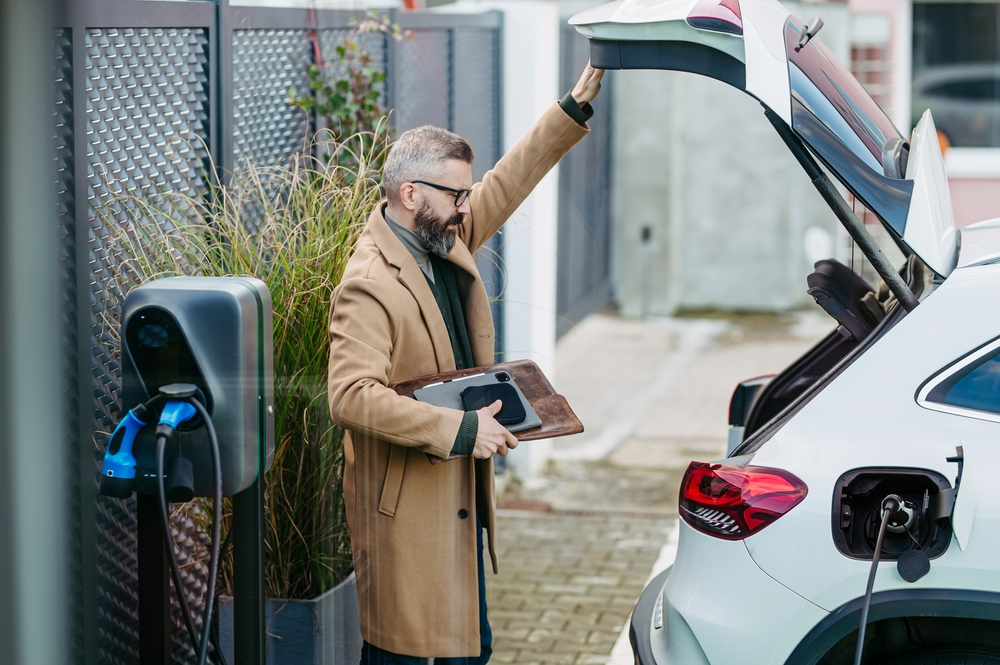
In the Hyundai, you’ll probably burn through your battery energy at more like 16kWh/100km, so your €5.37 in this case buys you around 277km of driving range — even better value again.
If you take the same figures for Electric Ireland’s Night Boost rate, then you’ll pay a little more, around €5.80 for the same mileage, while on Bord Gáis’s Smart EV plan, the cost is around €7. So obviously, it’s good to shop around, but regardless, it’s cheaper to run an electric car than it is a petrol or diesel one.
In fact, if you were to take two directly comparable family hatchbacks — an electric MG4 EV and a petrol-powered VW Golf 1.5 TSI for example — and run the numbers, the Golf comes out with an annual fuel bill, assuming you cover the average Irish national annual mileage of 16,000km, of around €1,300. The MG? In and around €400, depending on your tariff and charging habits.
You can do even better than that if you get solar panels installed. Now it’s true that solar panels aren’t necessarily cheap to fit, but there are both government grants and zero-interest loans available, which helps to defray the cost somewhat. Get some solar going on your roof though, and not only can you make a useful dent in your electric bills, but you can potentially start selling power back to the national grid. Better still, in Budget 2026, the Irish government announced that it won’t charge you income tax on the first €400 worth of energy that you sell to the grid from your solar panels. That’s the same €400 it’ll cost you to ‘fuel’ your MG4 EV for the entire year… Suddenly, you can run your car for free, in theory.
However, it’s not all rosy. Irish consumers still pay more for electricity than those in other European countries. In fact, only Germany has higher domestic electricity costs than we do, although perhaps we can take some encouragement from the fact that Australia is currently producing so much solar energy that energy providers there are going to start allowing some free electricity use for some households. We’ll never make that much from solar, but we might just do so with wind…
Public charging costs are still something of a blight, and they became worse again recently when ESB e-cars announced it was raising its prices for all its slow, medium and fast public-charging points. This is why having charging at home is so crucial, because if you’re trying to run an EV using only public charging, then the costs soon start to spiral.
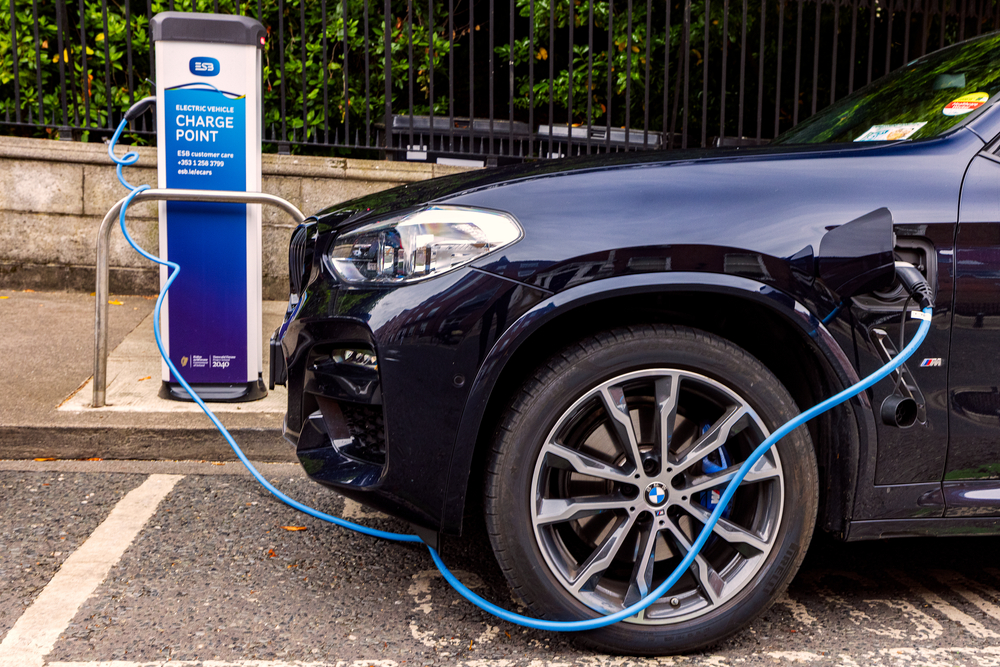
Let’s take the VW ID.4 and Hyundai Inster once again as examples. If you were to use ESB e-car’s 22kW on-street chargers to top its 77kWh battery up from 10-100 per cent, you’d pay around €40 at the current 50c per kWh price. A 100 per cent charge in an ID.4 will give you a realistic driving range of 450km, which is good, but to cover the same distance with an equivalent petrol-engined SUV, averaging 6.0 litres per 100km, you’d need to spend €45 on fuel — not much of a gap.
In the Hyundai, you’d pay €26 for the same 10-100 per cent top-up, giving you a realistic range of around 300km, and in petrol costs that 300km would add up to around €30 if we take the same notional car averaging 6.0 litres per 100km fuel economy, but the Inster is up against smaller, more efficient cars, which might potentially dip down to 5.0 litres per 100km, which would mean a fuel cost of just €25.
It gets worse again if you’re using fast chargers, which, depending on the supplier, can cost as much as 78c per kWh, which means that they’re really only for short, sharp, get-you-home top-ups, not long charges.
So, the lesson to take home is that running an EV can be incredibly cheap, as long as you have off-street parking at home, and as long as you’re prepared to do your homework when it comes to choosing the best home electricity tariff. And if you really want to bring the running costs right down, go solar.